Blog 2: One Message. One Impact. Focus on the 'Why' and Urgency
"The two most important days in your life are the day you are born and the day you find out why." — Mark Twain
The Clinical Imperative: Why Clarity Cannot Wait
In the high-stakes environment of a clinical grand rounds or a surgical briefing, information is rarely the problem. We are drowning in data, flooded with longitudinal studies, and submerged in statistical significance. The real challenge—the one that keeps us up at night—is ensuring that our colleagues don't just hear the data, but understand the immediate urgency behind it. At SlidesRx, we believe that Clarity is Clinical. If a presentation fails to communicate the "Why" and the "Urgency," it isn't just a missed opportunity for engagement; it is a potential barrier to improved patient care.
We’ve all seen that slide. You know the one: thirty-four bullet points, three overlapping charts, and a title that simply says "Results." In that moment, the audience is forced to do the heavy lifting. They have to hunt for the meaning, decode the relevance, and decide for themselves if the information requires action. This cognitive load is the enemy of impact. When we fail to anchor our talk in a single, urgent message, we leave our audience drifting in a sea of "What" without ever reaching the "So What?" This article explores how to pivot your presentations from data dumps to purpose-driven narratives that demand attention and drive clinical change.

The Urgency of One: Moving Beyond Information to Impact
The most common mistake in medical communication is the belief that more information leads to better decisions. In reality, the human brain—especially the brain of a busy clinician—is wired to filter out noise. To cut through the static, your presentation must have a "North Star": a single, central takeaway that answers the patient-centered "Why." Identifying this message is akin to a surgeon identifying the core pathology before the first incision. It requires discipline, but it is the only way to ensure your talk has a lasting clinical impact.
The "Why" is the Anchor
Every piece of data you present should be a tether back to your central "Why." If you are discussing a new antibiotic stewardship protocol, the "Why" isn't just "reducing costs." The "Why" is "preventing multi-drug resistant infections in our ICU." By centering the message on clinical outcomes and patient safety, you transform a dry administrative update into a moral and professional imperative. This shift in focus changes the energy of the room. When the audience understands the "Why," they are no longer just passive recipients of data; they become partners in a mission.

Creating Clinical Urgency
Urgency is not about speaking faster or using red fonts. Real clinical urgency is the realization that the status quo is no longer acceptable. To create this in your presentation, you must bridge the gap between "this is interesting" and "this must change today." This is achieved by explicitly stating the consequences of inaction. If your single message is that "Early mobilization reduces hospital-acquired pneumonia by 30%," the urgency is built-in. Every day we wait to implement this is a day a patient is at unnecessary risk.
The Discipline of One Point Per Slide
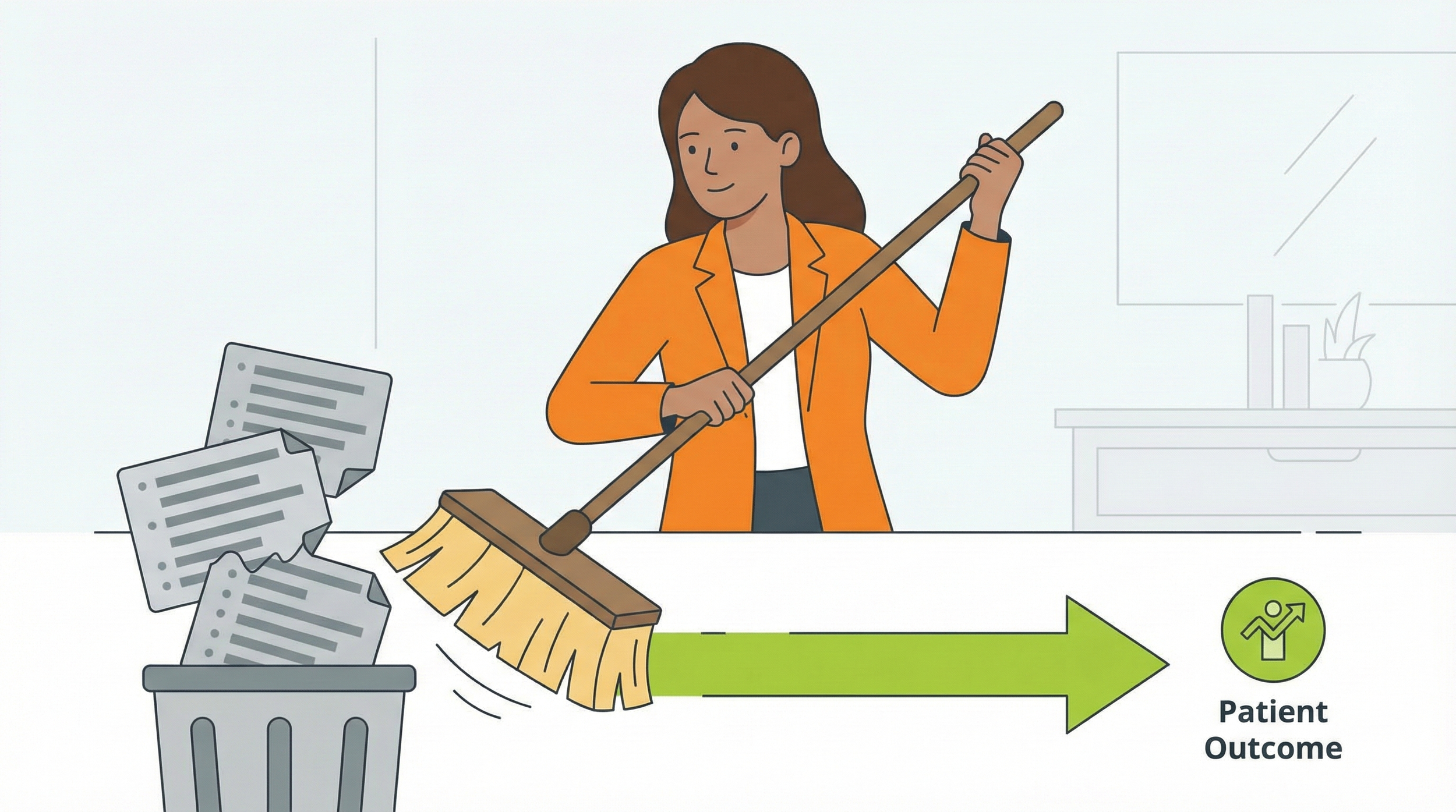
To maintain this urgency, your slides must be lean. If a slide doesn't directly support your single takeaway, it shouldn't be there. We often feel the need to include "supporting data" just to show we’ve done the work, but this often dilutes the "Why." Instead, embrace the discipline of the "One Message Per Slide" rule. If you are showing a survival curve, the title shouldn't be "Kaplan-Meier Curve." It should be: "New Protocol Extends Median Survival by Six Months." This title forces the "Why" and the "Urgency" into the foreground, leaving no room for ambiguity.
Respecting the Clinical Clock
Your audience’s time is their most precious resource. By leading with your most urgent message in the first sixty seconds, you show professional respect. You are saying, "I know you are busy, so here is exactly what you need to know and why it matters right now." This proactive approach prevents the dreaded "Where is this going?" fatigue that sets in during the third or fourth slide of background context. When you focus on the 'Why' and the urgency, you aren't just giving a presentation; you are delivering a clinical intervention.

Quick Takeaways
Identify the North Star: Define one single takeaway that answers "Why this matters for the patient."
State the Stakes: Explicitly communicate the clinical urgency or the risk of the status quo.
Lead with Impact: Announce your core message within the first minute of your talk.
Audit for Relevance: Remove any slide or data point that does not reinforce the "Why."
Actionable Titles: Use slide titles to state conclusions, not just categories of data.
Conclusion
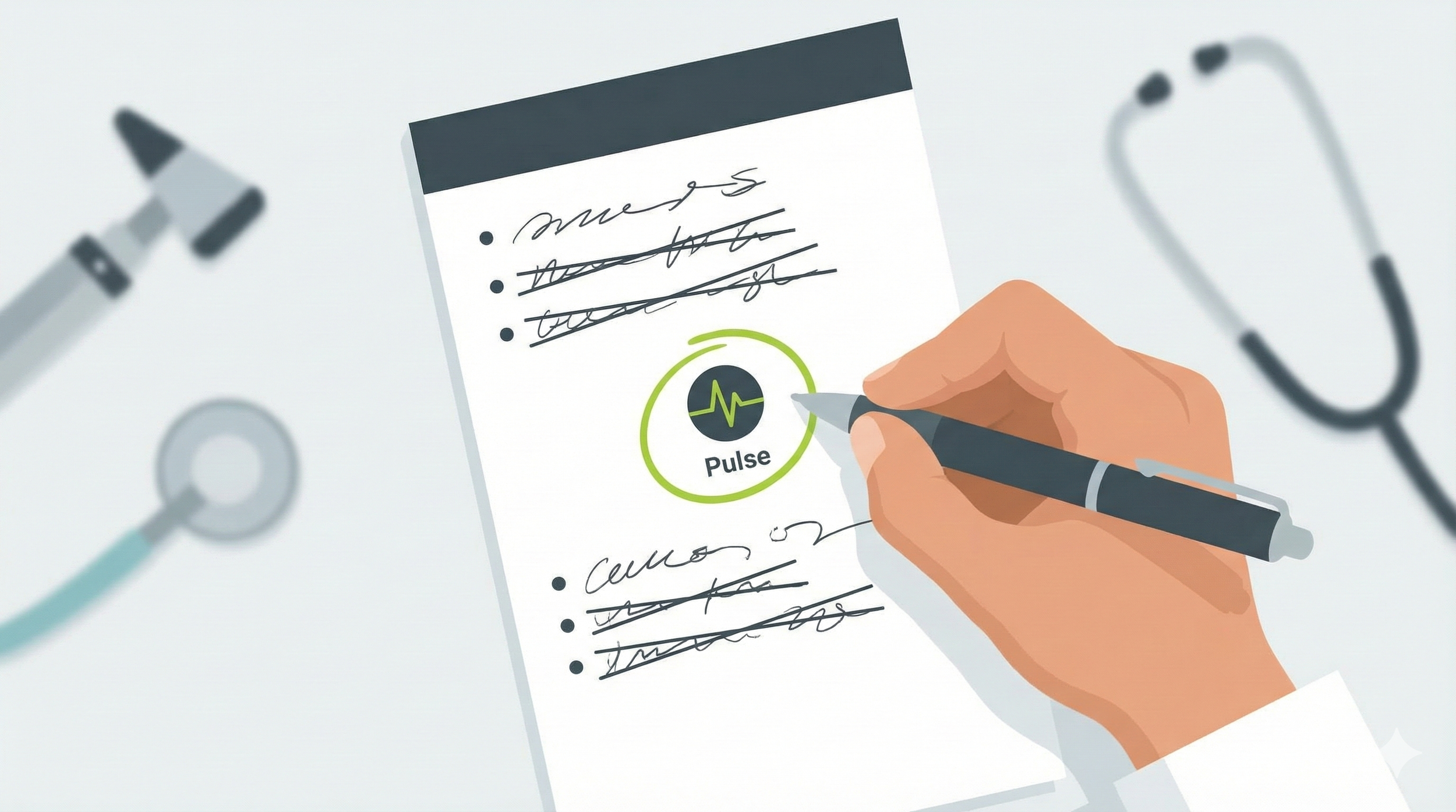
Precision in medical communication is as vital as precision in a prescription. By focusing your entire presentation on one clear message anchored in "Why" and "Urgency," you move beyond the role of a lecturer and into the role of a leader. You provide your colleagues with the clarity they need to make informed, timely decisions. At SlidesRx, we are committed to helping you find that focus, because when the message is clear, the impact is clinical.
The Challenge
The "So What?" Audit: Take your next scheduled presentation and look at your three most data-heavy slides. For each one, ask yourself: "If I could only say one sentence about this slide to a busy colleague in a hallway, what would it be?" If that sentence doesn't convey urgency or a clinical 'Why,' rewrite the slide title to reflect that one sentence. Do this for just those three slides and notice how the narrative sharpens.
Next Week Preview
The Clinical Compass: Bold Titles, Clear Outcomes. Join us next week as we explore how to transform passive slide headers into powerful signposts that guide your audience toward the right clinical conclusions.
Call to Action
What is the hardest part about choosing just one message when you have so much important data to share? Share your thoughts with us on LinkedIn—we want to help you find the "Why" in the noise.
